
Introduction
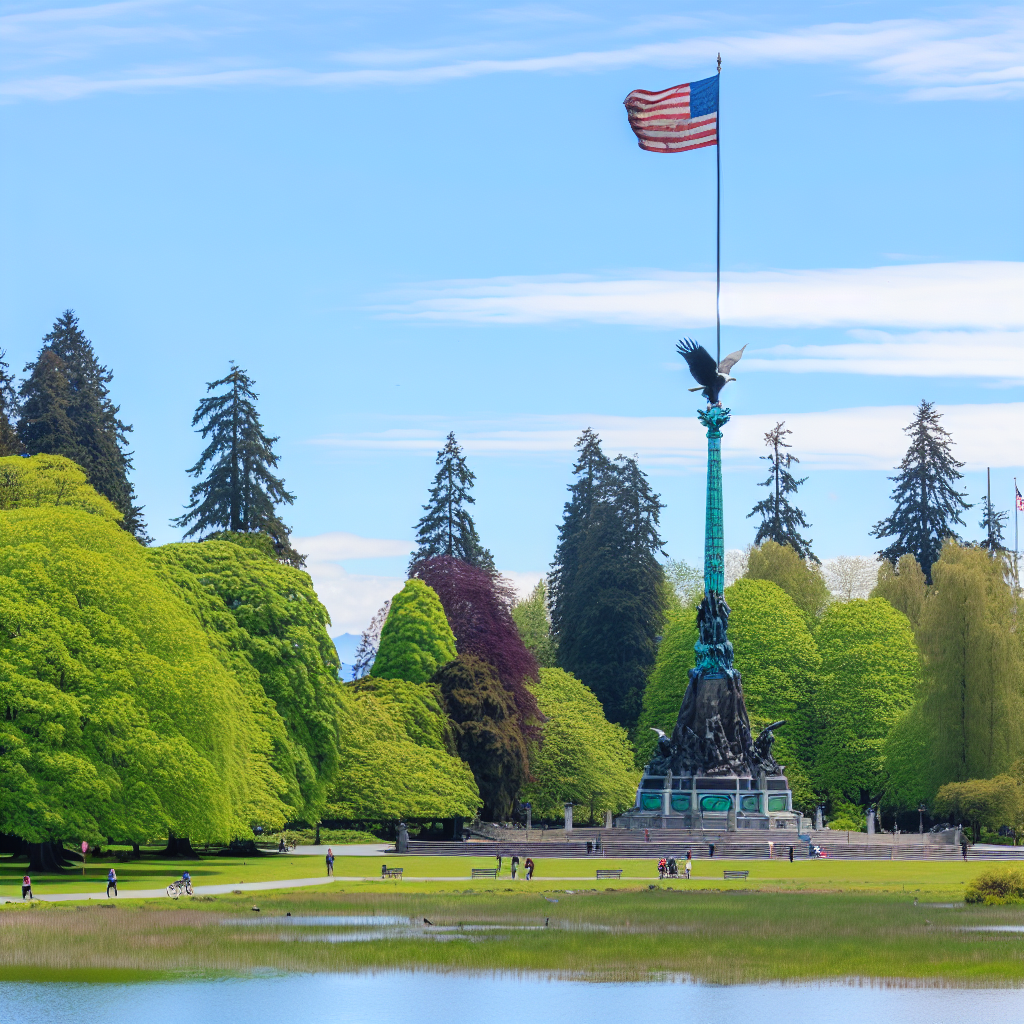
Stanley Park, one of Canada’s most renowned green spaces, offers an intriguing blend of natural beauty and cultural significance. Nestled in the vibrant city of Vancouver, British Columbia, this sprawling park is a favorite among locals and tourists alike. Although firmly Canadian, Stanley Park holds a distinct connection to the United States, both historically and culturally. This article will explore these connections, examining how Stanley Park serves as a subtle bridge between the U.S. and Canada.
Historical Ties
Stanley Park’s history features significant interactions with the United States. Before the park’s establishment in 1888, the land was inhabited by the Squamish, Musqueam, and Tsleil-Waututh peoples, whose trade routes stretched across what are now the Canadian-American borders. With the advent of European settlement, the British colony of Vancouver forged trading partnerships with their American counterparts, strengthening North American ties. During the Klondike Gold Rush in the late 19th century, Stanley Park became a waypoint for many Americans journeying north, leaving behind historical traces that endure today.
Cultural Exchange
Today, Stanley Park fosters a continuous cultural exchange between the United States and Canada. Hosting a vast array of events, the park sees countless visitors from the U.S. who come to enjoy its scenic beauty and participate in various events. The Vancouver Aquarium, situated within the park, is particularly popular among American tourists, offering educational exhibits that commonly feature collaborative research with American institutions. This ongoing exchange promotes mutual understanding and cooperation between the two nations.
Environmental Collaboration
Stanley Park is also a site of significant environmental collaboration between Canada and the United States. As both countries face similar environmental challenges, particularly in the Pacific Northwest, cross-border efforts in conservation and climate action are crucial. Initiatives within Stanley Park often involve U.S.-based organizations, focusing on wildlife preservation, habitat restoration, and sustainable tourism. These partnerships between American and Canadian environmental groups enhance the park’s preservation strategies and contribute to broader ecological efforts in the region.
Economic Impacts
The economic relationship between the United States and Stanley Park is worth noting. The park’s proximity to the U.S.-Canada border attracts many American visitors, which in turn contributes to British Columbia’s tourism economy. This influx of tourists supports local businesses, from hospitality to retail, thus underscoring the park’s role in fostering bilateral economic benefits. Yet, the park also represents a subtle site of economic diplomacy, strengthening the ties between both nations through peaceful and mutually advantageous exchange.
Conclusion
Stanley Park, though located in Canada, embodies a unique connection to the United States, one that spans history, culture, environment, and economy. Through its rich historical background, ongoing cultural exchanges, collaborative environmental efforts, and shared economic interests, Stanley Park stands as a symbol of the enduring relationship between the two nations. As both countries continue to face shared challenges, the park remains a pivotal, albeit understated, touchstone for Canada-U.S. relations, reflecting the broader narrative of cooperation and friendship that defines North America.
Related Articles
Please provide a city.